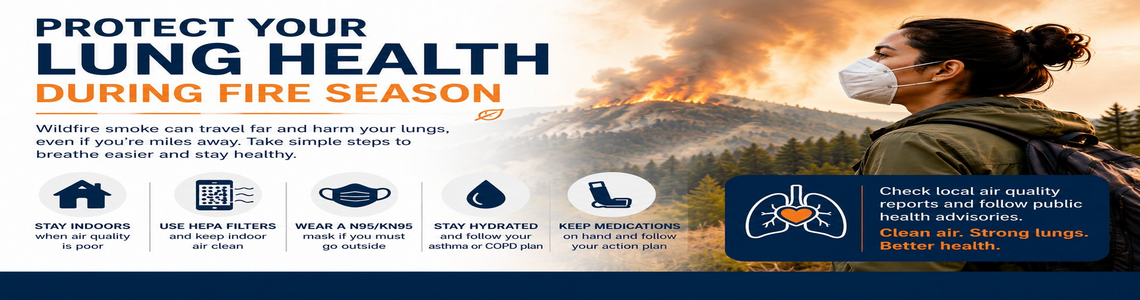
Wildfire season can pose serious risks to lung health, particularly for children, older adults, pregnant individuals, and those with asthma, COPD, or other respiratory conditions. Smoke from fires contains fine particulate matter, ash, and harmful chemicals that can travel long distances and significantly reduce air quality, even for people living many miles away from the fire itself. Exposure may lead to coughing, throat irritation, shortness of breath, wheezing, headaches, fatigue, and worsening of chronic lung disease.
One of the most important ways to protect your lungs during fire season is to minimize exposure to outdoor smoke. Stay indoors whenever air quality levels are poor, and keep windows and doors closed as much as possible. If available, use a high-efficiency particulate air (HEPA) purifier or run your home’s air conditioning system with a clean filter to help reduce indoor smoke particles. Avoid activities that worsen indoor air pollution, such as smoking, burning candles, or vacuuming frequently during smoky conditions.
When going outdoors is unavoidable, wearing a properly fitted N95 or KN95 mask can help reduce inhalation of harmful particles. Standard surgical or cloth masks do not provide adequate protection against wildfire smoke. It is also important to stay well hydrated, as dry air and smoke exposure can irritate the airways and throat. Individuals with asthma or chronic lung disease should ensure they have access to prescribed inhalers and medications, and follow their physician’s action plan closely during fire events.
Finally, pay close attention to local air quality reports and public health advisories throughout fire season. Even short-term smoke exposure can affect otherwise healthy individuals, especially with repeated or prolonged exposure over several days. If you develop persistent coughing, chest pain, difficulty breathing, dizziness, or worsening respiratory symptoms, seek medical evaluation promptly. Taking preventive steps early can help reduce complications and protect long-term lung health during wildfire season.